
Tutorial: Artificial Intelligence (AI) in Power Systems
Date
- 29 September 2026
- 08:30 – 13:00
- Room: IV
Information
The Tutorial will be held at the workshop venue, the Pestana Douro Riverside.
Please come to the main registration desk to collect your conference badge before going to the tutorial.
Tutorial Lecturers
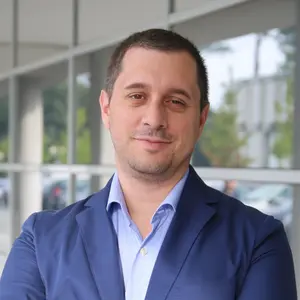 Ricardo Bessa
INESC TEC, Portugal
 Ricardo Andrade
INESC TEC, University of Porto, Portugal
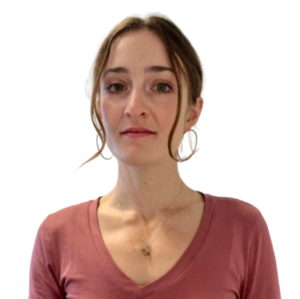 Matilde Gargiani
Hitachi Energy, Switzerland
 Alberto Dognini
EPRI Europe, Ireland
 Johanna Vorwerk
Technical University of Denmark – DTU, Denmark
Preliminary Agenda
Lecture 1 (40 min.)
AI-based Decision Systems Alongside Humans in Power Systems
Ricardo Bessa (INESC TEC, Portugal
This session explores the latest advances in AI-based assistants designed to support human decision-makers across a wide range of tasks, such as smart alarm processing, dynamic security assessment, and congestion management. Two key concepts are explored in this talk: (a) moving beyond purely data-driven models, and combine data with structured domain knowledge and expert reasoning by leveraging symbolic AI learning architectures to improve interpretability, robustness, and generalization, (b) present the AI4REALNET framework for human-AI co-working, enabling operators to: monitor system performance, identify and implement remedial actions, and support operational planning with confidence.
Discussion & Short Break (10 min)
Lecture 2 (40 min.)
The Future of Grid Operations: AI-Assisted Decision Support
Matilde Gargiani (Hitachi Energy, Switzerland)
Power systems are becoming increasingly complex. The rapid growth of renewable generation, electrification, distributed energy resources, digitalization, and evolving operational requirements are placing unprecedented demands on grid infrastructure and operational processes. Operators and engineers must manage changing power-flow patterns, emerging network constraints, growing volumes of information, and weather-driven uncertainty, all while ensuring the secure and reliable operation of the grid.
This tutorial explores how advances in artificial intelligence can help utilities manage the growing complexity of modern power systems. Based on the development of an AI-powered operational assistant at Hitachi Energy Research, the session demonstrates how foundation models can be combined with operational data, network models, engineering applications, and utility procedures to provide a new generation of assistance that goes beyond information retrieval and supports the execution of complex operational workflows.
Through practical demonstrations, participants will see how AI can enable natural-language interaction with grid information, orchestrate analyses across multiple engineering tools, automate multi-step workflows, investigate abnormal system conditions, and provide context-aware recommendations. The tutorial will illustrate how AI systems can combine reasoning, traceable evidence, and power-system analytics to answer operational questions ranging from asset and procedure inquiries to grid status assessment and contingency analysis.
Special attention will be given to the requirements of critical infrastructure environments, including explainability, traceability, robustness, auditability, and human oversight. Participants will see how AI-assisted workflows can enhance operator situational awareness, accelerate engineering investigations, and support decision-making while maintaining full transparency and human authority over operational actions.
Rather than viewing AI as a replacement for human expertise, the session presents AI as an enabler of the energy transition, helping utilities transform growing system complexity into actionable insight while maintaining the safe, reliable, and efficient operation of the grid.
Discussion & Short Break (10 min)
Coffee Break
Lecture 3 (40 min.)
Trustworthy AI for DER Integration: A Testing and Experimentation Facility for Distribution Grid Congestion Management
Alberto Dognini (EPRI Europe, Ireland)
This lecture highlights the development of trustworthy AI solutions and, specifically, the validation of these tools for grid applications, with a particular emphasis on EPRI’s work through the AI-EFFECT Testing and Experimentation Facility. This facility is instrumental in the development, validation and enhancement of AI agents, and a practical example of an AI tool designed for DER integration in distribution grids will be provided.
Discussion & Short Break (10 min)
Lecture 4 (40 min.)
Can We Trust ML for Power System Dynamic Simulations?
Johanna Vorwerk (Technical University of Denmark – DTU, Denmark)
Power system dynamic simulations are becoming increasingly computationally demanding as renewable generation and converter-based technologies reshape system behaviour. ML offers new possibilities to accelerate simulations through neural surrogates, physics-informed learning, and operator-learning approaches. However, the use of ML in safety-critical dynamic studies raises an important question: can these models be trusted? This tutorial provides an overview of ML-based methods for dynamic simulations and introduces Neural Tangent Kernel analysis as a framework for understanding what neural networks learn when approximating power system dynamics.
Discussion (10 min)
Lecture 5 (40 min.)
AI for Renewable Energy Forecasting
Ricardo Andrade (INESC TEC, University of Porto, Portugal)
The variability and uncertainty of renewable energy sources (RES) introduce significant challenges for power system management, making accurate forecasting essential. This session will begin with an overview of traditional forecasting methods and how advanced feature engineering, particularly the use of spatiotemporal information from Numerical Weather Predictions, can significantly improve the forecasting skill. The second part of the session will provide a closer look at Predico, a collaborative forecasting platform created by INESC TEC, which combines market-based mechanisms with ensemble forecasting to aggregate information from multiple independent forecasters. Predico has been running as an operational proof-of-concept with Elia, the Belgian TSO, producing forecasts for offshore wind and total solar generation. The session closes with operational results from this deployment.
Discussion (10 min)
LUNCH
Participation Fees & Registration
- The Tutorial in not included in the general participation fee of the Wind & Solar Integration Workshop.
- As the number of participants for the Tutorial is limited, tickets are available on a first come, first served basis.
- The Tutorial can be canceled if less than 10 participants register.
- Registration will open on 15 June 2026.
About our Tutorials

In our tutorials, you have the opportunity to deepen your knowledge regarding crucial renewables topics in an intimate setting.
In intense presentations by specially invited experts you gain not only detailed knowledge but also a unique hands-on-experience.