
Call for Papers

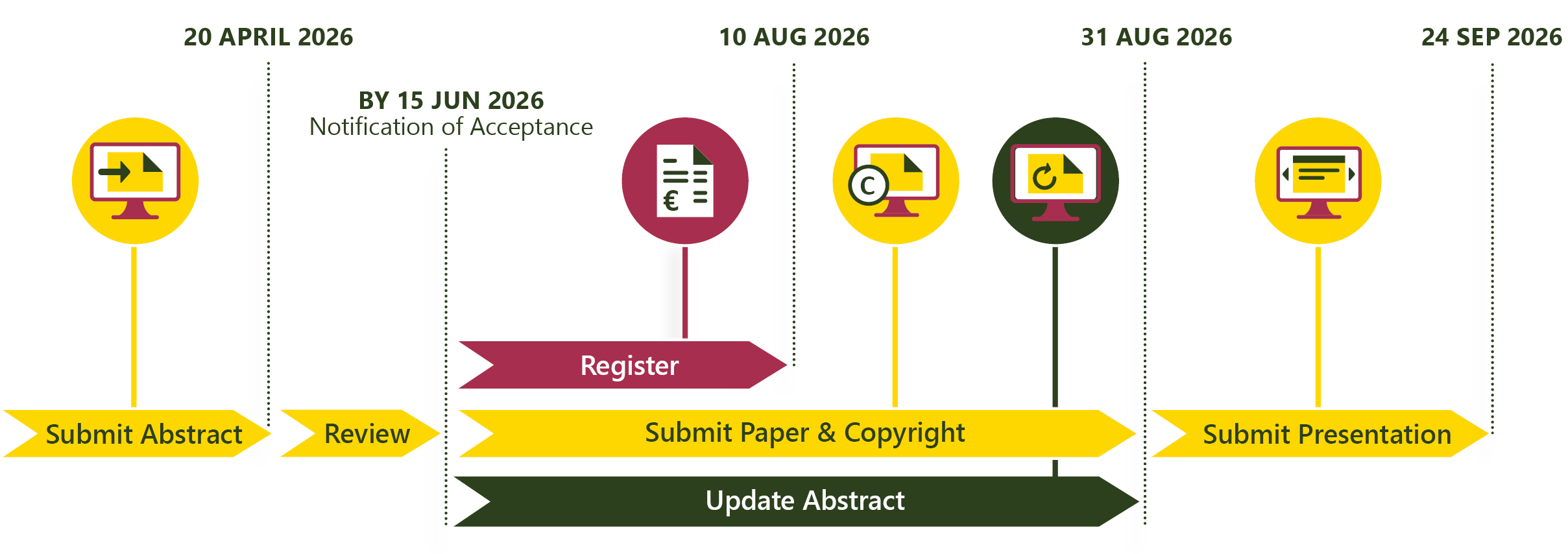
  • The Call for Papers has started: Submit your abstract until 20 April 2026
  • In-person participation in Porto is mandatory for speakers and poster presenters presenting their work.
  • The full, camera-ready papers have to be submitted online by 31 August 2026 at the latest.
  • As the conference language is English, all abstracts and papers have to be written in English.

More questions? Please check out FAQs for more information.

Take Advantage of Major Speaker Benefits

  • Receive a discount on the participation fee for speakers and poster presenters.
  • Get published in the conference proceedings, featured on IET Digital Library, and IEEE Xplore.
  • Papers are submitted for indexing in IET Inspec, Ei Compendex and Scopus
  • Network with political influencers, international experts, and practitioners from 30+ countries.
  • Gain recognition from leading international experts.
  • Share your insights and research findings with peers, creating awareness for your project.
  • Inspire with actionable ideas and engage with a global audience.

The papers presented at the 25th Wind & Solar Integration Workshop 2026 will be published on the IET Digital Library and IEEE Explore, and submitted for indexing in IET Inspec, Ei Compendex and Scopus.


Topics of the Workshop

With the rapid advancements in hydrogen solutions and the numerous presentations that were presented under this topic at the 2025 Wind & Solar Integration Workshop, hydrogen will once again be among the 2026 workshop topics. For a better overview and easier understanding, the detailed topics are grouped.

Grid Integration of Wind Power Plants

  • Project Experience with Grid Integration of Wind Power Plants
  • Grid Forming Capabilities and Practical Experience
  • Transmission Grid and Power System Integration Issues
  • Distribution Grid Challenges for Wind Power Integration
  • Power Quality Issues in Wind Energy Integration
  • Compliance with Grid Codes Using New Hardware
Offshore Wind Power Systems

  • Offshore Wind Power System Modeling
  • Offshore Wind Power Projects with HVDC Systems
  • Project Experience in Offshore Wind Power Integration

Wind Power System Studies and Modelling

  • Power System Studies for Wind Energy Integration
  • Challenges and Solutions in Wind Power System Modeling

Grid Integration of Solar PV and Battery Systems

  • Case Studies and Lessons Learned: Integrating PV and Battery Systems into Transmission Grids
  • Power System Studies: Stability, Capacity, and Operational Behavior with High PV Penetration
  • Distribution Grid Challenges: Voltage Regulation, Load Balancing, and Infrastructure Upgrades with PV Integration
  • Transmission Grid Challenges: Stability, Capacity, and Reactive Power Management for High PV Penetration
  • Power Quality Issues: Addressing Harmonics, Voltage Fluctuations, and Flicker in PV-Integrated Grids
  • Ancillary Services from PV and Battery Systems: Frequency Regulation, Spinning Reserve, and Voltage Support
  • Power System Balancing: Strategies for Managing Variable Solar PV Generation

Modelling and Operational Strategies for PV and Storage Systems

  • Modelling Challenges: Simulating PV and Battery System Behavior Under Varying Conditions
  • Battery Storage Operation and System Modelling: Performance Optimization in Grid Applications
Digitalization, Forecasting, and Smart Grid Solutions

  • Aggregation and Management of Distributed Energy Resources (DER): Coordinating Distributed Solar PV Resources for Grid Services
  • Forecasting Solar PV Generation: Optimizing Grid Operations and Market Participation
  • Smart Grid Technologies and IT Innovations: Enhancing PV Grid Integration and Resilience
  • Artificial Intelligence and Machine Learning: Optimizing Grid Management, Forecasting, and Fault Detection for PV Systems

Energy Market, Policy, and Sector Coupling

  • Energy Market Structures and Regulatory Frameworks: Governing PV and Battery Storage Integration
  • Sector Coupling Solutions: Integrating PV Systems with Hydrogen Production and Storage
  • Decarbonization of Energy Sectors: Leveraging PV and Battery Storage to Reduce Carbon Emissions

Hydrogen for Power System Stability and Balancing

  • Power System Balancing with Hydrogen-Based Solutions: Stabilizing Electricity Supply and Demand through Hydrogen Production, Storage, and Consumption
  • Ancillary Services from Hydrogen Systems: Frequency Regulation, Voltage Control, and Reserve Power Provided by Hydrogen Technologies

Modelling and Simulation of Hydrogen Systems

  • Electrolyzer System Modelling for Grid Integration: Simulation of Electrolyzer Behavior and Performance in Power Systems
  • Electrolyzer Modelling for Power System Studies: Detailed Analysis of Electrolyzer Operation in Grid Applications
  • Fuel Cell System Modelling: Simulating Fuel Cell Performance for Integration into Energy Systems
  • Hydrogen Plant and System Modelling: Comprehensive Modelling of Hydrogen Systems for Grid Applications
Renewable Hydrogen Technologies and Applications

  • Renewable Hydrogen Technologies: Innovations in Hydrogen Production, Storage, and Consumption for Renewable Energy Integration
  • Applications of Hydrogen in Renewable Energy Systems: Practical Deployment and Use Cases of Hydrogen in Power and Energy Sectors

Energy System Management and Hydrogen Integration

  • Energy System Management with Hydrogen: Strategies for Coordinating Hydrogen Production, Storage, and Consumption in Energy Systems
  • Energy System Modelling with Hydrogen: Analyzing Hydrogen’s Role in Optimizing Energy Flows and Enhancing Grid Stability

Hydrogen Market Dynamics and Regulations

  • Hydrogen Energy Market Dynamics: Market Mechanisms and Trading Strategies for Hydrogen in the Energy Sector
  • Regulatory Frameworks for Hydrogen: Policies and Standards Governing Hydrogen Systems in Energy Markets